
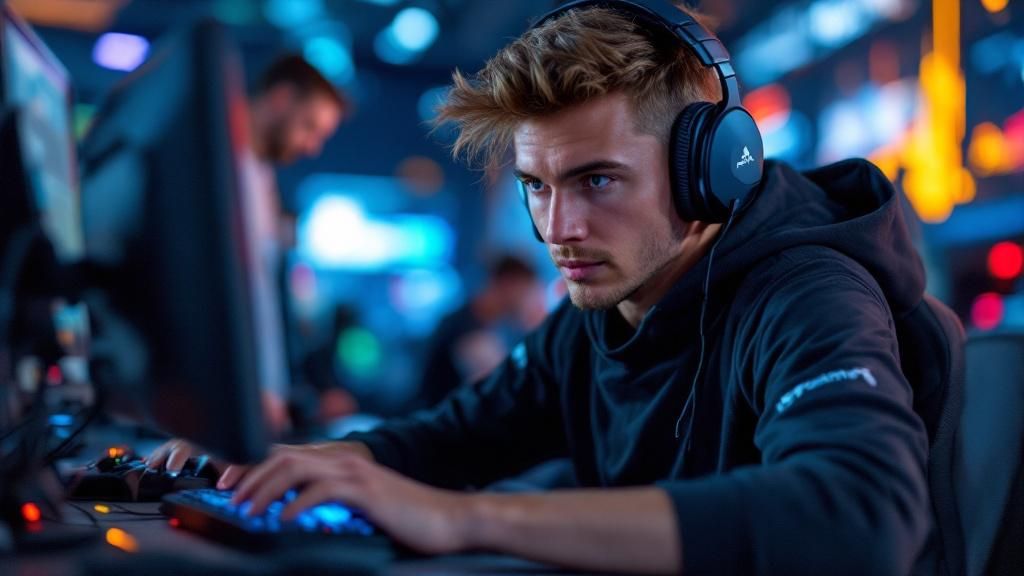
The competitive gaming landscape is undergoing a significant transformation as professional esports organisations invest in advanced coaching strategies to elevate player performance. Drawing inspiration from traditional sports science, gaming coaches are now adopting systematic training programmes, mental preparation, and advanced analytics to refine mechanics and tactical decision-making. This article explores the cutting-edge techniques revolutionising esports development, investigating how these novel approaches are redefining player development programmes and establishing new benchmarks for excellence in competitive esports.
Modern Coaching Methods
Modern gaming coaches are transforming player development by adopting evidence-based techniques previously limited to traditional athletics. Advanced performance analytics now monitor reaction times, strategic choices, and mechanical consistency across numerous gameplay hours. Coaches employ this granular data to recognise specific weaknesses and customise individualised training programmes accordingly. By bringing methodological discipline to esports coaching, organisations are realising tangible progress in player consistency and competitive outcomes, fundamentally reshaping how talent is cultivated within the industry.
Psychological conditioning has emerged as a cornerstone of contemporary esports coaching strategies. Professional coaches now utilise sports psychologists to help players manage performance anxiety, sustain focus during high-pressure matches, and develop resilience against setbacks. Mental training protocols include visualisation exercises, mindfulness techniques, and stress management strategies adapted for competitive gaming environments. This comprehensive approach recognises that elite performance requires both technical mastery and psychological fortitude, enabling players to perform optimally when stakes are highest.
Structured training programmes have replaced the informal practice sessions of the early esports era. Coaches now create structured training schedules that prioritise specific skill development, strategic comprehension, and group cohesion. These programmes employ focused practice approaches, where athletes concentrate deeply on demanding components of their play rather than simply accumulating hours. By adopting periodisation methods adapted from conventional sports science, teams can enhance player progression schedules and prevent burnout whilst maintaining competitive edge.
Collaborative coaching frameworks have revolutionised how esports teams handle athlete progression. Rather than depending entirely on individual coaches, organisations now engage cross-functional squads including technical experts, tactical specialists, and support staff. This combined methodology allows for comprehensive player assessment and focused support across various skill areas. Lead coaches work alongside individual skill specialists to maintain unified communication and aligned progression plans, establishing collaborative settings where players receive comprehensive support for sustained improvement.
Video analysis technology has become essential within modern coaching arsenals. Coaches leverage cutting-edge software to break down match footage, identifying repeated tendencies in both winning and losing plays. This comprehensive review allows coaches to deliver targeted, actionable feedback grounded in tangible data rather than broad comments. Players can review their own performances alongside coach commentary, facilitating deeper understanding of their strategic thinking and mechanical execution throughout match play.
Recuperation and health protocols now get the same attention alongside active training within modern coaching frameworks. Coaches recognise that sustained high performance demands sufficient sleep, nutrition, and mental rest between intensive training sessions. Progressive organisations implement full wellness programmes addressing physical fitness, nutritional optimisation, and mental wellbeing. This proactive approach reduces the risk of injury, maintains consistent performance levels, and demonstrates genuine investment in players’ long-term health and career longevity within professional esports.
Mental Conditioning and Emotional Resilience
Mental fortitude has become equally crucial as mechanical skill in professional gaming. Leading esports organisations now employ sports psychologists and mental coaches to develop comprehensive psychological conditioning initiatives. These specialists collaborate with players to cultivate emotional control, stress management, and cognitive resilience, ensuring athletes maintain peak performance under tournament pressure. By addressing the psychological dimensions of competitive gaming, coaches are helping players tackle anxiety, maintain focus during extended matches, and recover mentally from setbacks.
Strengthening Focus and Concentration
Sustained focus during competitive matches separates elite players from their competitors. Contemporary gaming coaches utilise research-backed focus techniques rooted in athletic psychology research. Players engage in mindfulness practice, visualisation exercises, and focus-management drills designed specifically for esports environments. These methods reinforce neural pathways linked to focus, allowing players to sustain optimal cognitive performance across entire tournaments. Coaches track concentration metrics during training sessions, detecting lapses and introducing targeted interventions to improve consistency.
Effective focus training requires ongoing practice and customised strategies tailored to each player’s needs. Gaming coaches analyse each athlete’s concentration patterns, identifying triggers that cause focus disruptions during critical moments. Through structured practice and concentration activities, players develop reflective thinking—the ability to monitor and adjust their own mental states. This mental clarity proves crucial during competitive events, allowing players to recognise distractions and quickly regain concentration on competitive targets.
- Mindful breathing sessions running fifteen to twenty minutes each day
- Visualization drills recreating high-pressure competitive conditions
- Attention-control drills targeting sustained focus intervals
- Biofeedback training tracking pulse rate and brainwave patterns
- Distraction control techniques in competitive settings
Implementation of these focus-enhancing methods has produced measurable improvements in player performance metrics. Teams report strengthened quality of decisions, improved reaction speed to sudden changes, and enhanced reliability across several competitions. Players develop increased confidence in their ability to maintain focus under intense conditions, translating psychological improvements into measurable competitive edge during high-pressure competitions and tournaments.
Technology Integration in Training
In-Depth Analytics and Performance Tracking
Modern gaming coaches utilise advanced digital tools to evaluate player performance data with remarkable accuracy. These systems record detailed data on reaction times, decision-making patterns, and on-field placement, enabling coaches to recognise particular aspects needing development. By employing thermal visualisations and replay analysis tools, coaching staff can examine intricate match situations and deliver focused guidance. This evidence-based methodology converts subjective observations into concrete data, helping players to comprehend their strong points and areas for improvement thoroughly. The adoption of machine learning substantially strengthens this capability, predicting performance trends and proposing customised training modifications.
The adoption of real-time monitoring systems has reshaped how coaches assess training sessions and competitive matches. Biometric sensors now measure physiological responses including cardiac rhythm variation, stress levels, and fatigue indicators during gameplay. This data offers significant value for understanding how psychological pressure affects decision quality and performance. Coaches utilise these findings to develop focused psychological training programmes, ensuring players maintain optimal cognitive function during critical match situations. The integration of performance metrics and bodily measurements establishes a holistic understanding of player development, supporting more effective intervention strategies and individualised training approaches.
VR and Simulation Training
Virtual reality technology has emerged as a transformative tool in esports coaching, permitting players to practise intricate situations in controlled environments. These immersive training environments reproduce competitive conditions with remarkable accuracy, permitting athletes to build motor memory and strategic responses without game-day pressure. VR training platforms enable coaches to manipulate variables systematically, isolating specific skills for focused development. Players can continually face challenging situations, building confidence and refining decision-making abilities. This technology demonstrates especially useful for preparing for infrequent dangerous plays that take place seldom during everyday play, ensuring complete preparation for top-tier contests.
Simulation-based training goes further than personal skill improvement to incorporate team-based tactical preparation. Coaches employ sophisticated gaming engines to create customised situations reflecting opposition approaches and match conditions. Teams can rehearse synchronised reactions to various threats, building synchronisation and communication protocols crucial to elite performance. The ability to review and assess practice simulations provides valuable insights into tactical performance and group unity. Furthermore, VR training reduces injury risk stemming from repeated drills, supporting player longevity. These technological advancements broaden access to professional-standard training approaches, allowing clubs internationally to adopt professional-standard methods.
Machine Learning and Predictive Analysis
Machine learning algorithms now analyse large data collections covering player statistics, opponent tendencies, and match outcomes to generate predictive insights. These systems identify patterns invisible to human analysis, revealing best approaches against specific opponents and drawing attention to vulnerability areas demanding defensive focus. Coaches leverage algorithmic recommendations to inform competition strategy, ensuring teams compete in competitions fully ready. The technology keeps improving from match data, improving prediction accuracy with each match. This complex assessment empowers coaching staff to determine actions from evidence regarding athlete improvement objectives and strategic modifications, maximising competitive advantage through technological innovation.
Advanced forecasting systems extend to personalised athlete progression, predicting performance patterns and establishing appropriate training loads for continuous progression. AI-powered systems analyse how various training approaches influence performance advancement, enabling coaches to tailor development initiatives scientifically. Such technologies recognise when players approach performance plateaus, proposing tactical adjustments to drive performance gains. Furthermore, analytical systems forecast injury likelihood based on training intensity and performance data, facilitating proactive safeguarding. This anticipatory strategy to athlete development represents a paradigm shift from reactive coaching, positioning organisations to optimise athlete development whilst preserving long-term career sustainability and competitive relevance.
